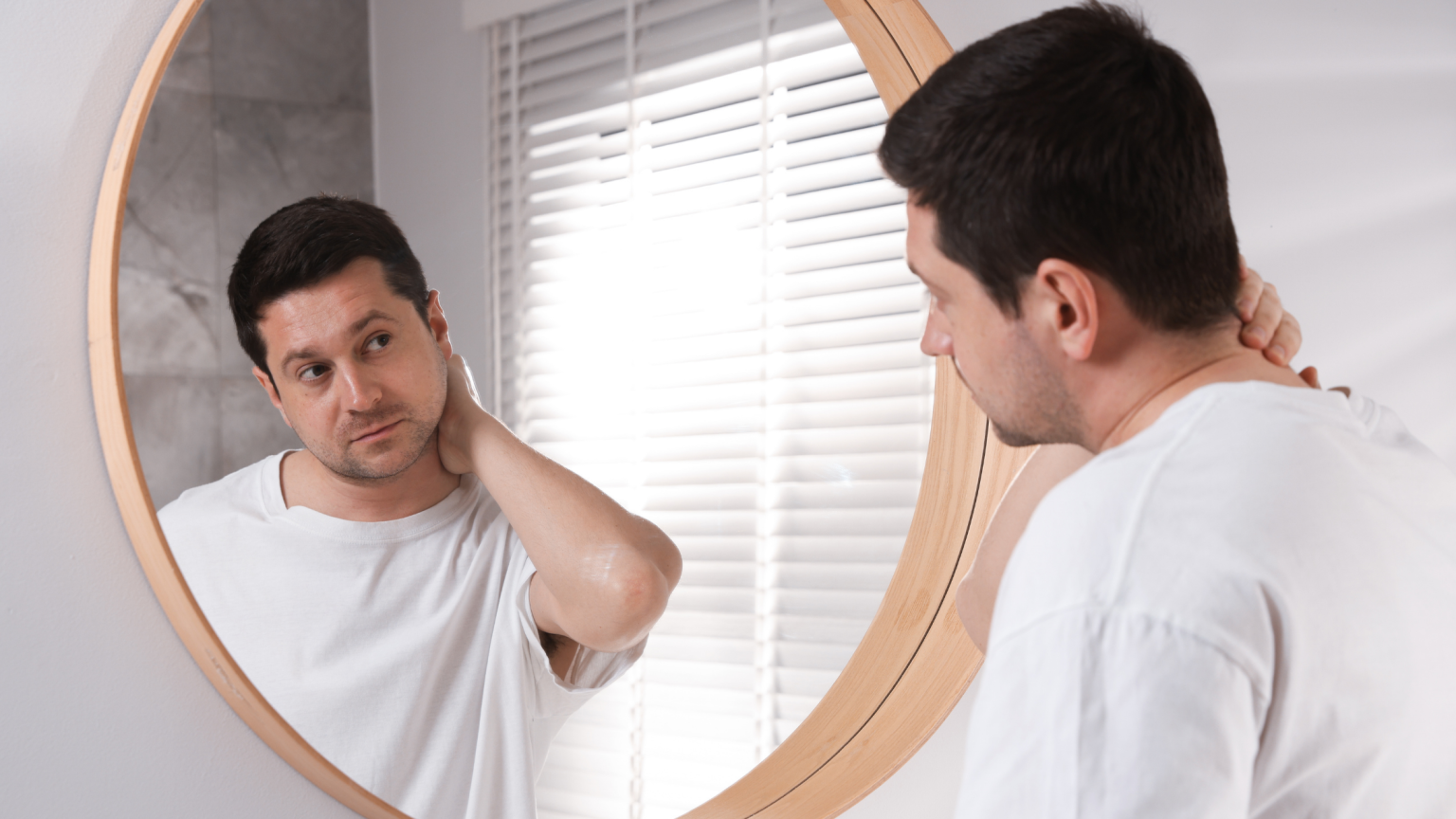
Body image is often associated with conversations about girls and women, yet boys and men experience appearance-related pressures that can significantly influence their mental and emotional well-being.
From pre-teen boys comparing themselves to classmates to teenage athletes feeling pressure to develop muscular physiques, appearance expectations can begin early and continue throughout adulthood.
For adult men, these pressures may evolve into concerns about weight, muscle definition, hair loss, height, aging, physical performance, and maintaining an appearance associated with confidence or success.
While specific concerns may change with age, the underlying emotional experience often remains similar:
- Am I good enough?
- Do I measure up to other men?
- Will people respect or accept me if I look different?
These questions can influence self-esteem, relationships, behavior, and overall mental health.
Unfortunately, body image concerns in boys and men are frequently overlooked, minimized, or misunderstood.
Some males feel uncomfortable discussing appearance-related insecurities because they have learned that expressing vulnerability conflicts with expectations of masculinity.
Others may not recognize that their behaviors, such as excessive exercise, rigid eating habits, constant comparison, or avoiding social situations, are connected to body image distress.
Healthy body image is not about achieving a particular appearance. It is about developing a balanced, respectful relationship with the body while recognizing that personal worth extends far beyond physical characteristics.
Understanding how appearance pressure affects males of all ages can help individuals and families recognize emotional challenges earlier and develop healthier ways of responding.
What Is Body Image, and Why Does It Matter for Boys and Men?
Body image refers to the thoughts, feelings, beliefs, and perceptions individuals have about their physical appearance and bodies. It includes more than whether someone likes what they see in the mirror.
Body image can influence how comfortable a person feels in social situations, how they interpret comments from others, and how much importance they place on appearance when evaluating themselves.
- A boy who believes he is too small may feel embarrassed during sports.
- A teenager who compares his body to muscular influencers may begin feeling inadequate.
- An adult man experiencing hair loss may become increasingly self-conscious during social or professional interactions.
Although these concerns involve different physical characteristics, they may share a common emotional theme: the belief that appearance determines acceptance, confidence, or personal value.
Body Image and Self-Esteem Are Connected, but They Are Not the Same
Body image involves how a person perceives and feels about their body.
Self-esteem involves a broader evaluation of personal worth, competence, and value.
A person can experience dissatisfaction with a physical feature while maintaining healthy self-esteem.
However, when appearance becomes the primary measure of worth, body image concerns may begin influencing overall confidence.
For example, a teenager who thinks, “I wish I were taller,” may experience ordinary appearance dissatisfaction.
When that thought becomes, “Nobody will respect me because I’m short,” the concern has expanded into a belief about personal worth and social acceptance.
Counseling can help individuals recognize when dissatisfaction with a physical characteristic has developed into a broader pattern of self-criticism.
The Unspoken Appearance Standards Placed on Boys and Men
Cultural expectations surrounding male appearance can be contradictory.
Boys and men may be encouraged to look strong, muscular, lean, athletic, confident, and physically capable. At the same time, they may receive messages that caring too much about appearance is vain or unmasculine.
This creates a difficult emotional situation.
A boy may feel pressure to look a certain way while believing he should not admit that the pressure affects him.
An adult man may spend significant time worrying about his appearance but avoid discussing those concerns because he assumes other men do not experience them.
These expectations can make body image distress less visible.
The Pressure to Be Muscular and Lean
One of the most common appearance ideals directed toward males emphasizes muscularity combined with low body fat.
Fitness advertising, entertainment, social media, sports culture, and peer interactions can reinforce the belief that a strong, muscular physique represents confidence, attractiveness, and success.
However, body size and muscular development vary naturally based on genetics, age, health, development, and other factors.
The appearance presented as ideal may be unrealistic or unhealthy for many individuals to pursue.
Scenario: The Boy Who Thinks He Is Too Small
An 11-year-old boy begins noticing that some classmates are taller and physically stronger.
During recess, other children comment on his smaller size.
Although the comments may be dismissed as teasing, the boy begins interpreting his body as a disadvantage.
He avoids certain games, becomes hesitant to participate in sports, and starts describing himself as weak.
At home, he asks why he does not look like the other boys.
A Supportive Solution
Parents and guardians can begin by acknowledging the emotional experience rather than immediately trying to dismiss it.
A caregiver might respond: “It sounds like those comments have made it harder to feel comfortable with your body. That can be really upsetting.”
The conversation can then shift toward understanding that bodies grow and develop at different rates.
Adults can reinforce qualities unrelated to size, including creativity, kindness, problem-solving, humor, perseverance, and friendship.
Counseling may help a child identify feelings of embarrassment, challenge negative beliefs, and develop confidence in social situations.
The goal is not to convince a child that physical differences do not exist. It is to help the child understand that those differences do not determine worth.
Pre-Teen Boys and Body Image: When Comparison Begins Early
Pre-adolescence is an important period for developing self-awareness and identity.
As children approach puberty, they may become increasingly conscious of physical differences among peers.
Height, weight, body shape, athletic ability, skin changes, and the timing of puberty can become sources of comparison.
Some boys begin developing earlier than others.
Those who develop later may feel left behind, while those who develop earlier may feel uncomfortable with increased attention to their bodies.
Both experiences can create emotional challenges.
When Physical Development Becomes a Social Competition
Consider a 12-year-old who notices that several classmates have developed broader shoulders and deeper voices.
He begins worrying that something is wrong because his body has not changed in the same way.
He avoids changing clothes around peers and becomes uncomfortable participating in activities that draw attention to physical differences.
His parents notice increased irritability but are unaware of the underlying concern.
How Parents Can Help
Parents can normalize the wide range of healthy developmental timelines without making promises about exactly how a child’s body will change.
Age-appropriate conversations about puberty can reduce uncertainty and shame.
Caregivers can also avoid comparing siblings or peers.
Statements such as “Your brother was much bigger at your age” may unintentionally reinforce insecurity.
A more supportive message emphasizes that development is individual and that physical differences are expected.
When body image concerns begin affecting social participation, mood, or daily functioning, counseling can provide additional support.
Teen Boys, Social Media, and the Comparison Trap
Social media has introduced new opportunities for boys and teenagers to compare their appearance with others.
Fitness influencers, athletes, actors, and online personalities frequently display highly curated images emphasizing muscularity, definition, and physical transformation.
Lighting, posing, editing, selective posting, and other factors can influence how bodies appear online.
Some content may also promote unrealistic expectations about how quickly a physique can change.
For adolescents still developing physically and emotionally, these images can become powerful standards against which they evaluate themselves.
Scenario: When Fitness Content Becomes Self-Criticism
A 15-year-old begins following fitness accounts to learn about exercise.
Initially, the content feels motivating.
Over time, the teenager becomes increasingly focused on achieving the same appearance as the people in the videos.
He begins comparing his arms, chest, shoulders, and stomach to images online.
Although he is physically healthy, he starts describing himself as too skinny and not muscular enough.
He checks his appearance repeatedly and becomes upset when he does not notice immediate changes.
Exercise gradually shifts from an enjoyable activity into a source of pressure.
A Therapeutic Solution: Building Media Literacy and Balanced Thinking
Counseling can help the teenager recognize how repeated exposure to idealized images influences self-perception.
A therapist may explore beliefs such as: “If I don’t look muscular, nobody will respect me.”
Through Cognitive Behavioral Therapy (CBT), the teenager can learn to examine the accuracy of that belief and consider healthier alternatives.
For example: “Physical appearance does not determine whether someone deserves respect. Strength and confidence can develop in many ways.”
Parents can support this process by discussing how social media images are created and encouraging a more balanced online environment.
The objective is not necessarily to discourage exercise or interest in fitness.
It is to help teenagers separate healthy physical activity from appearance-based pressure and self-worth.
When Exercise Becomes About Punishment Instead of Health
Physical activity can support mental health, physical health, confidence, and emotional regulation.
However, exercise may become problematic when it is driven primarily by fear, guilt, rigid rules, or an intense need to change appearance.
Some boys and men feel compelled to exercise even when injured, exhausted, or emotionally distressed.
Others experience significant guilt when they miss a workout.
In these situations, exercise may no longer feel like a choice.
Scenario: The Teen Athlete Who Cannot Rest
A 17-year-old athlete begins spending increasing amounts of time training outside regular team practices.
He believes that every missed workout will cause him to lose progress.
Even when sore or injured, he insists on exercising.
When family members suggest taking a rest day, he becomes defensive and anxious.
His self-esteem becomes increasingly connected to physical performance and appearance.
A Healthier Solution
Parents, coaches, and healthcare professionals can reinforce that rest, recovery, nutrition, and overall well-being are essential parts of physical health.
A therapist may help the teenager identify rigid thinking patterns and explore the emotional meaning attached to exercise.
For example: “If I miss one workout, I will fall behind everyone else” can be examined as a belief rather than accepted as fact.
Treatment may focus on flexibility, emotional regulation, and developing sources of self-worth outside athletics.
When exercise patterns involve injury, restrictive eating, or significant distress, appropriate medical and mental health evaluation is important.
Muscle Dysmorphia: When Someone Never Feels Muscular Enough
For some males, appearance concerns become persistent and highly distressing.
Muscle dysmorphia is a form of body dysmorphic disorder in which an individual becomes preoccupied with the belief that their body is insufficiently muscular or lean, even when others may perceive them as muscular.
This preoccupation can lead to repetitive body checking, excessive exercise, rigid eating patterns, avoidance of social situations, and significant emotional distress.
Muscle dysmorphia is not simply enthusiasm for fitness.
It involves an ongoing concern that can interfere with daily functioning.
Scenario: When Progress Never Feels Like Enough
A 22-year-old college student has spent several years strength training.
Friends frequently comment on his muscular appearance. However, he continues seeing himself as too small.
He avoids social gatherings that interfere with his workout schedule and becomes distressed when he cannot follow strict eating routines.
No amount of physical progress seems to create lasting satisfaction.
A Therapeutic Solution
A mental health professional can assess whether these concerns reflect muscle dysmorphia, another body image difficulty, or a related condition.
Evidence-based treatment, often including CBT adapted for body dysmorphic concerns, can help address distorted appearance beliefs, compulsive behaviors, and avoidance.
Medical assessment may also be necessary when individuals use potentially harmful supplements, performance-enhancing substances, or extreme exercise practices.
The therapeutic goal is to reduce distress and restore flexibility, not to judge an individual’s interest in fitness.
Body Image, Food, and Eating Disorders in Boys and Men
Eating disorders and disordered eating are often incorrectly assumed to affect only girls and women.
Boys and men can also experience restrictive eating, binge eating, compensatory behaviors, rigid food rules, and significant distress surrounding body shape or weight.
In males, these concerns may sometimes center on becoming more muscular rather than solely becoming thinner.
A teenager may eliminate entire food groups because of fitness content.
An adult may feel intense guilt after eating foods labeled unhealthy.
Another individual may alternate between strict dietary control and episodes of feeling unable to control eating.
These behaviors deserve attention regardless of the person’s body size.
Scenario: When Healthy Eating Becomes Rigid
A 19-year-old begins paying closer attention to nutrition.
Over time, food choices become increasingly restrictive.
He avoids eating at restaurants, feels anxious about family meals, and becomes distressed when foods do not fit his rules.
Friends praise his discipline, making the underlying distress less noticeable.
A Supportive Solution
Family members can focus on the emotional and behavioral changes rather than commenting on weight or appearance.
A supportive conversation might begin: “Eating seems to have become stressful lately, and it looks like some activities are harder to enjoy. It may help to talk with someone about what has been happening.”
A healthcare professional and eating-disorder-informed treatment team can evaluate the situation and recommend appropriate care.
Early support matters because disordered eating can affect physical and mental health even when outward signs are subtle.
Adult Men’s Body Image: When Appearance Pressure Changes With Age
Body image concerns do not necessarily disappear after adolescence.
For many adult men, they evolve alongside life responsibilities, physical changes, relationships, and aging.
A man who once focused on gaining muscle may later become concerned about weight gain.
Another may experience distress about hair loss or changes in skin and appearance.
Someone recovering from an injury may struggle with changes in strength or mobility.
These experiences can influence identity, confidence, and emotional well-being.
Scenario: The Adult Who No Longer Looks Like His Younger Self
A 38-year-old father remembers feeling physically fit during college.
Now, balancing work, parenting, and family responsibilities has changed his routine.
He notices changes in weight and muscle definition.
When looking at older photographs, he begins criticizing his current appearance.
He avoids swimming with his children because he feels embarrassed about his body.
What began as dissatisfaction with physical changes has started interfering with meaningful family experiences.
A Therapeutic Solution: Redefining Self-Worth Beyond Appearance
Counseling can help adults explore how identity and self-esteem have become connected to physical appearance.
A therapist may help the father identify the belief: “If I don’t look like I did at 22, I’ve let myself go.”
The individual can begin developing a more balanced perspective that recognizes changing responsibilities, natural physical development, and the many dimensions of personal value.
Therapy may also encourage participation in meaningful activities without waiting for appearance-related confidence to become perfect.
For example, the father may gradually return to swimming with his children while practicing strategies for managing self-critical thoughts.
The goal is to prevent appearance concerns from limiting connection, enjoyment, and participation in everyday life.
Hair Loss, Aging, and the Pressure to Remain Youthful
For some men, hair loss and visible signs of aging can affect confidence and identity.
These changes may be associated with fears about attractiveness, professional relevance, or how others perceive them.
Cultural messages often associate youthfulness with energy, desirability, and success.
As a result, normal physical changes may become emotionally difficult.
Scenario: When Hair Loss Changes Social Confidence
A 44-year-old man begins noticing significant hair thinning.
He becomes increasingly self-conscious during work meetings and social gatherings.
Before leaving home, he spends considerable time trying to conceal the change.
Eventually, he begins declining invitations to events where photographs may be taken.
A Healthier Response
Counseling can help the individual identify the meaning attached to the physical change.
Rather than assuming that hair loss automatically makes him less attractive or respected, therapy can explore how those conclusions developed.
A therapist may also help reduce avoidance behaviors and strengthen confidence in social situations.
Acceptance does not require pretending that appearance changes are emotionally insignificant.
It involves recognizing that physical changes do not have to determine identity or participation in life.
The Impact of Body Image on Men’s Mental Health
Appearance-related distress can influence several areas of psychological well-being.
Anxiety and Constant Self-Monitoring
Some individuals become preoccupied with how they look in photographs, mirrors, social settings, or clothing.
They may repeatedly check their appearance or seek reassurance.
Although reassurance can provide temporary relief, the underlying insecurity may return quickly.
Depression and Low Self-Esteem
Persistent negative beliefs about appearance may contribute to feelings of inadequacy, hopelessness, social withdrawal, or reduced enjoyment.
Body dissatisfaction does not automatically cause depression, but the two can occur together and reinforce one another.
Perfectionism and Unrealistic Standards
Men who believe they must maintain a specific appearance may develop rigid expectations around exercise, eating, grooming, or physical performance.
When those expectations become impossible to maintain, self-criticism may intensify.
Shame and Emotional Isolation
Boys and men may hesitate to discuss appearance concerns because they fear being judged or dismissed.
Silence can make distress harder to recognize and address.
Relationship Difficulties
Body image concerns can influence dating, emotional intimacy, physical affection, and communication.
A man who feels uncomfortable with his appearance may withdraw from situations involving vulnerability.
A partner may interpret that withdrawal as rejection rather than insecurity.
How Body Image Can Affect Romantic Relationships
Body image concerns are not always experienced privately.
They can influence how individuals connect with partners and respond to intimacy.
A Couples Scenario: When Insecurity Creates Distance
A 35-year-old man becomes increasingly self-conscious about weight gain.
He begins avoiding physical affection and changes clothes privately.
His partner notices the distance and assumes he is no longer interested in the relationship.
The man feels embarrassed discussing his appearance concerns, so he avoids the conversation.
Both partners become frustrated and disconnected.
A Couples Counseling Solution
Couples therapy can help partners explore the emotional experiences underlying changes in behavior.
The man may learn to communicate: “I’ve been struggling with how I feel about my body, and it has affected my confidence. It isn’t about losing interest in the relationship.”
The partner may gain a clearer understanding of the withdrawal and respond with empathy rather than assumptions.
Individual counseling can also help the man address self-critical beliefs and rebuild comfort with vulnerability.
The goal is not to make a partner responsible for another person’s self-esteem.
It is to strengthen communication while supporting individual emotional growth.
The Connection Between Masculinity and Emotional Expression
Some boys and men grow up receiving messages that emotional vulnerability should be hidden.
Statements such as “Man up,” “Don’t be so sensitive,” or “Real men don’t worry about that” can discourage honest conversations about insecurity.
When body image concerns develop, these expectations may make it difficult to ask for help.
A teenager may express insecurity through irritability rather than sadness.
An adult may become increasingly focused on exercise or appearance while avoiding conversations about underlying anxiety.
Recognizing these patterns can help families and clinicians understand the emotional experiences behind certain behaviors.
Scenario: When a Boy Hides His Insecurity Behind Anger
A 14-year-old becomes upset whenever family members comment on his appearance.
He responds with sarcasm or leaves the room.
Parents interpret the behavior as disrespect.
However, the teenager has been experiencing repeated teasing at school about his height and body size.
He feels embarrassed and does not know how to communicate it.
A Supportive Solution
A parent might say: “There seems to be a lot of frustration when appearance comes up. It may be connected to something that has been difficult to talk about.”
The parent can still maintain expectations for respectful behavior while creating room for emotional expression.
Therapy may help the teenager develop language for insecurity, embarrassment, anger, and shame.
Learning to express vulnerability can strengthen emotional regulation and relationships.
The Role of Fathers, Caregivers, Coaches, and Other Role Models
Adults influence how boys understand their bodies and personal value.
Children notice how parents discuss weight, appearance, aging, food, and exercise.
They also notice whether physical characteristics become sources of teasing or criticism.
A father who regularly criticizes his own body may unintentionally teach a child that appearance deserves constant evaluation.
A coach who emphasizes body size over effort and skill may contribute to appearance-related pressure.
Conversely, adults can model a healthier relationship with physical appearance.
A Family Scenario
A father frequently comments that he needs to lose weight before an upcoming vacation.
He describes certain foods as bad and expresses frustration whenever he misses a workout.
His 10-year-old son begins repeating similar statements about his own body.
A Healthier Family Approach
The father can shift the language toward well-being rather than appearance.
Instead of saying: “I look terrible. I need to lose weight.”
he might say: “I’ve been feeling tired lately, and I’d like to make time for activities that help me feel healthier.”
Families can also emphasize enjoyment, connection, and physical function rather than appearance.
The objective is not to eliminate every conversation about health or fitness.
It is to avoid teaching children that their bodies must look a particular way to deserve respect.
How Parents Can Support Healthy Body Image in Pre-Teen and Teen Boys
Parents and guardians can play an important role in helping boys develop a more balanced sense of self-worth.
1. Avoid Appearance-Based Teasing
Comments about height, weight, muscularity, or physical development can have lasting emotional effects.
Even jokes intended to be harmless may reinforce insecurity.
Families can establish expectations that bodies are not targets for ridicule.
2. Encourage Strengths Beyond Physical Appearance
Children benefit from recognition of qualities such as empathy, creativity, responsibility, persistence, and curiosity.
A boy who receives encouragement across many areas of life is less likely to depend entirely on appearance for validation.
3. Discuss Social Media and Unrealistic Standards
Parents can help teenagers understand how lighting, editing, posing, marketing, and selective presentation influence online images.
Questions about how certain content affects mood can encourage reflection.
4. Promote Balanced Relationships With Exercise and Food
Movement and nutrition should support health, development, and enjoyment.
Parents can be attentive when exercise becomes compulsive or eating patterns become rigid.
5. Make Emotional Conversations Normal
Boys benefit from knowing that insecurity, sadness, embarrassment, and anxiety are emotions they can discuss without judgment.
6. Recognize When Professional Support May Be Needed
When appearance concerns begin affecting mood, relationships, eating habits, exercise, school participation, or daily functioning, a mental health professional can help assess the situation.
Practical Strategies for Building Healthier Body Image and Self-Esteem
Developing a healthier relationship with appearance is an ongoing process.
The goal is not to eliminate every insecure thought.
It is to reduce the power those thoughts have over behavior and personal identity.
Shift From Appearance to Function and Well-Being
Instead of evaluating the body exclusively by how it looks, individuals can consider how it supports everyday life.
For a teenager, this may involve appreciating the ability to participate in a favorite activity.
For an adult, it may involve recognizing the body’s capacity for movement, connection, work, and meaningful experiences.
This perspective does not require constant gratitude for every physical characteristic.
It encourages a broader relationship with the body.
Identify Comparison Triggers
A person may notice that certain social media accounts, environments, or conversations consistently increase self-criticism.
Recognizing these triggers can support healthier choices.
For example, an adult who feels inadequate after scrolling through fitness content may decide to reduce exposure to accounts that promote unrealistic standards.
Challenge Appearance-Based Beliefs
A common thought might be: “I have to look muscular to be respected.”
A more balanced perspective might be: “Respect is influenced by character, relationships, behavior, and many qualities unrelated to physical appearance.”
These changes take practice, particularly when beliefs have developed over many years.
Reduce Repetitive Body Checking
Constant mirror checking, photographing, measuring, or seeking reassurance can maintain appearance-related anxiety.
A therapist can help individuals understand these patterns and gradually reduce behaviors that reinforce distress.
Build Identity Through Meaningful Activities
Self-esteem becomes more stable when it is supported by multiple sources.
Relationships, hobbies, learning, creativity, work, volunteering, and personal values can all contribute to identity.
For Colorado boys and men, activities such as hiking, biking, recreational sports, music, community involvement, or creative interests may provide opportunities to build confidence through experience rather than appearance.
The activity itself matters less than the opportunity to develop enjoyment, connection, and personal meaning.
When Body Image Concerns May Require Professional Support
Occasional appearance dissatisfaction is common.
However, certain patterns may indicate that additional support would be beneficial.
Warning signs can include:
-
Persistent negative statements about appearance or body size
-
Frequent comparison with peers, athletes, or social media figures
-
Avoidance of social activities because of appearance concerns
-
Excessive mirror checking or efforts to conceal perceived flaws
-
Rigid exercise routines accompanied by significant guilt or anxiety
-
Restrictive eating, binge eating, or other concerning food behaviors
-
Significant distress when workouts or appearance routines are interrupted
-
Withdrawal from relationships or previously enjoyable activities
-
Increasing anxiety, depression, irritability, or shame related to appearance
-
Use of potentially harmful substances or practices to change body size or muscularity
These behaviors do not automatically indicate a specific diagnosis.
However, they deserve compassionate attention and appropriate evaluation.
Concerns involving eating disorders, body dysmorphic disorder, or harmful exercise practices may require coordinated care involving mental health and medical professionals.
How Counseling Can Help Boys and Men Develop Healthier Self-Esteem
Counseling provides a space to explore the emotional experiences underlying body image concerns.
For some individuals, those concerns are connected to peer comparison.
For others, they may involve bullying, perfectionism, anxiety, depression, family expectations, trauma, or difficult life transitions.
Effective treatment considers the individual rather than assuming every appearance concern has the same cause.
Cognitive Behavioral Therapy
CBT can help individuals recognize and challenge unhelpful beliefs about appearance and worth.
A therapist may help someone examine the belief:
“If my body isn’t perfect, I am not good enough.”
Treatment can support more balanced thinking and reduce behaviors that reinforce anxiety or shame.
Emotional Regulation and Coping Skills
Some individuals experience strong emotional reactions to appearance-related triggers.
DBT-informed skills and other coping approaches may help manage distress, improve emotional awareness, and respond more effectively to difficult feelings.
Developmentally Appropriate Therapy for Children and Pre-Teens
Younger clients may benefit from creative, play-based, or expressive interventions that allow them to explore emotions without relying exclusively on verbal discussion.
These approaches can support emotional literacy, confidence, and self-understanding.
Therapy for Teen Identity and Self-Esteem
Adolescents may benefit from exploring how peer relationships, social media, athletics, and cultural expectations influence their sense of identity.
Therapy can help teenagers develop self-worth that is less dependent on comparison or approval.
Adult Counseling
Adult men may explore longstanding beliefs about masculinity, attractiveness, aging, achievement, and personal value.
Therapy can help reduce self-criticism and support healthier relationships with appearance, identity, and emotional vulnerability.
Family and Relationship Counseling
When body image concerns influence family communication or romantic relationships, therapy can help improve understanding and reduce patterns of shame, conflict, or emotional withdrawal.
What Healthy Male Confidence Actually Looks Like
Healthy confidence does not require someone to love every aspect of their appearance.
It does not mean never comparing themselves to others.
It does not require a muscular physique, a particular height, a specific weight, or the absence of physical insecurities.
Healthy confidence involves recognizing that appearance is only one part of a much larger identity.
- A confident pre-teen can recognize physical differences without assuming those differences make him less valuable.
- A confident teenager can pursue fitness goals without allowing appearance to determine self-worth.
- A confident adult man can experience aging and physical change without believing he has lost his identity.
This kind of confidence develops through self-awareness, meaningful relationships, emotional flexibility, personal values, and opportunities for growth.
True self-esteem is not built by meeting every appearance expectation. It is strengthened when individuals learn that their worth remains intact even when their appearance changes or does not match an ideal.

